

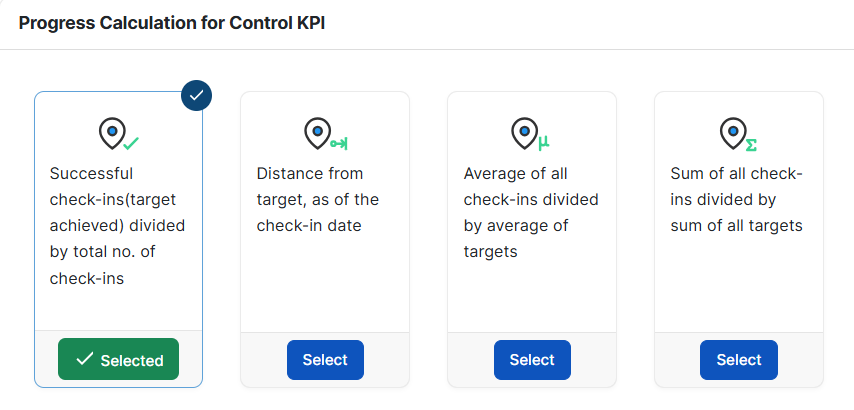
Profit.co's Control KPI key result type offers 4 progress calculation methods and 3 value types. The Successful Check-ins (Target Achieved) Divided by Total No. of Check-ins method measures performance consistency by counting only check-ins where the target threshold was met — giving you an accurate, binary view of recurring goal achievement.
Table of Contents
- What is the Successful Check-ins Progress Calculation?
- When to Use Successful Check-ins Calculation
- Why This Calculation Method Matters
- Settings Configuration
- Scheduled vs. Applicable Check-ins
- How It Works by Value Type
- Viewing Calculations
- Best Practices for Using Successful Check-ins Calculation
- Related Questions
- Frequently Asked Questions
What is the Successful Check-ins Progress Calculation?
This progress calculation method counts only the check-ins where the actual value meets the defined target threshold. Check-ins that fall outside the target range are treated as unsuccessful and contribute zero progress for that period.
When to Use Successful Check-ins Calculation
Choose this method when:
- Success is binary (you either hit the target or you don't)
- You want to measure the consistency of performance
- Each period's performance is independent (e.g., weekly targets)
- You're tracking habit formation or compliance rates
Why This Calculation Method Matters
Standard KPI progress calculations average all check-in values, which can mask persistent underperformance. The Successful Check-ins method removes that ambiguity by only counting periods where performance actually met the threshold, making it ideal for compliance tracking, habit formation, and recurring operational targets.
Teams tracking metrics like "respond to all support tickets within 2 hours" or "maintain error rate below 5%" benefit most from this approach — where a single missed period should not inflate overall progress.
Settings Configuration
To configure the calculation method for the Control KPI, navigate to the settings panel and select the required option:
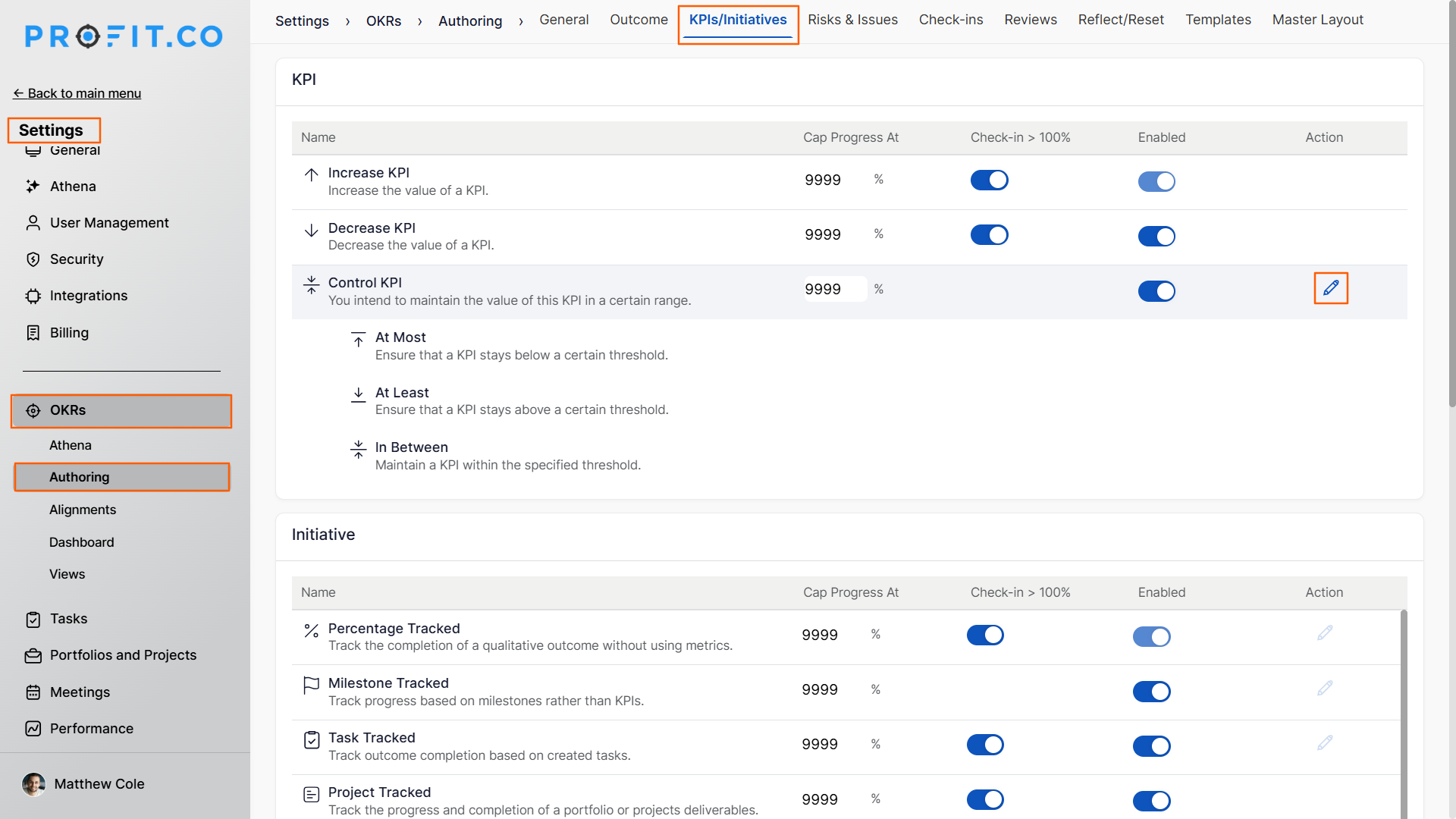
- Navigate to Settings → OKRs → Authoring from the left navigation panel
- Switch to the KPIs/Initiatives tab
- Edit the Control KPI and choose the required calculation option
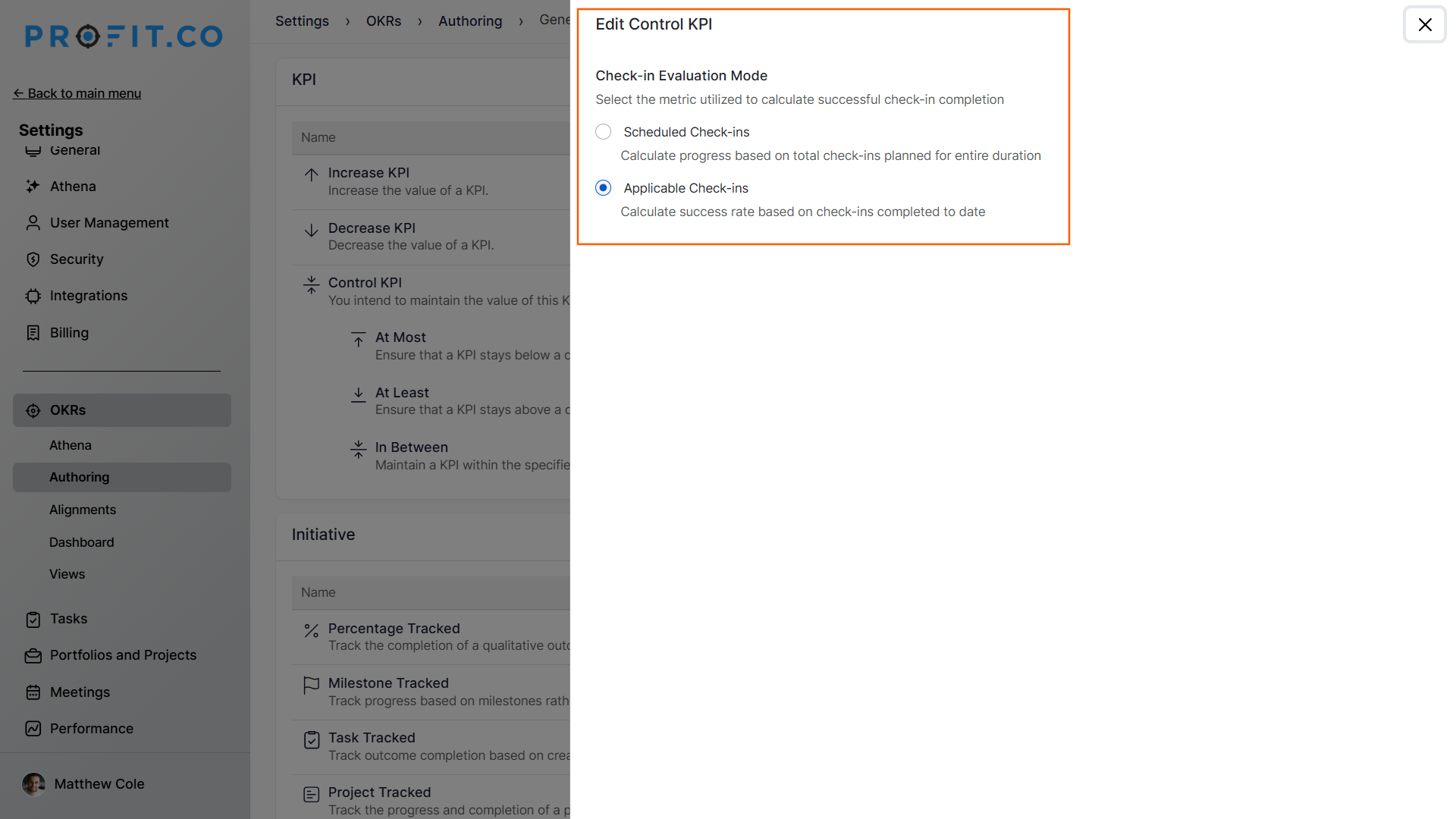
Once the option is selected, the updated logic, based on scheduled and applicable check-ins, will be applied to all new and existing Control KPI key results using this calculation method.
Scheduled vs. Applicable Check-ins
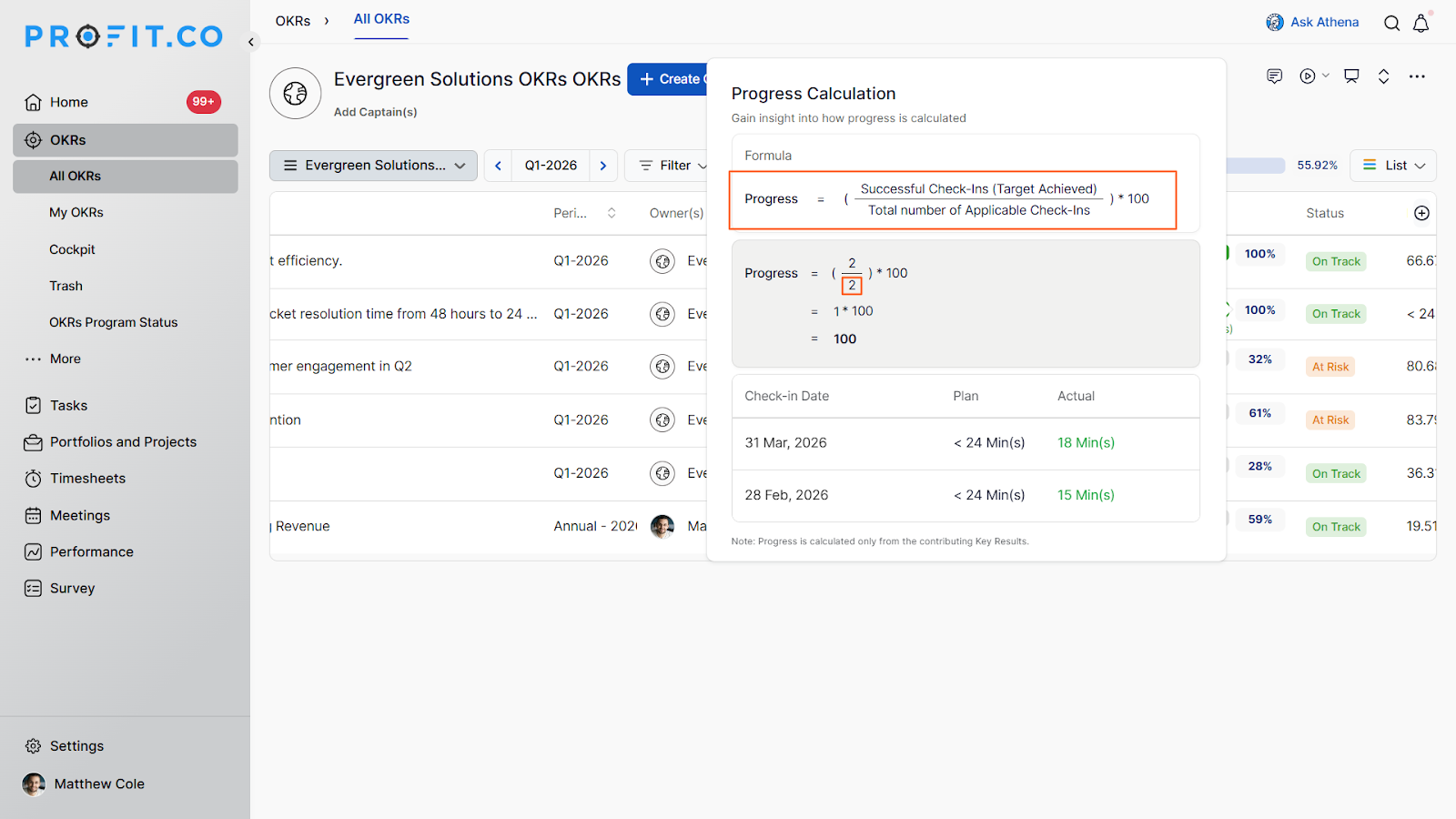
The calculation logic for the Successful Check-ins KPI has been updated. Previously, progress was calculated based on the total number of check-ins. The updated method now calculates progress based on scheduled check-ins and applicable check-ins, providing a more accurate representation of check-in completion.
| Check-in Type | Definition |
|---|---|
| Scheduled Check-ins | Total number of check-ins planned for a Key Result within the defined period |
| Applicable Check-ins | Number of check-ins that have become relevant based on user updates and the timeline |
Example
Imagine a Key Result created on March 16 for a quarter, where the check-in frequency is scheduled for the last day of each month. In this case, the Key Result will have three scheduled check-ins:
- January – Last day
- February – Last day
- March – Last day
Scheduled check-ins = 3
If the user edits the February check-in value, then: Applicable check-ins = 1
Later, when the user completes the March check-in, then: Applicable check-ins = 2
How It Works by Value Type
The three value types determine what qualifies as a successful check-in. The table below summarizes each:
| Value Type | Successful Check-in Condition | Unsuccessful Check-in Condition |
|---|---|---|
| At Least | Check-in value is equal to or greater than the target | Check-in value is below the target |
| At Most | Check-in value is equal to or less than the target | Check-in value exceeds the target |
| In Between | Check-in value falls within the lower and upper limits (inclusive) | Check-in value is below the lower limit or above the upper limit |
Viewing Calculations
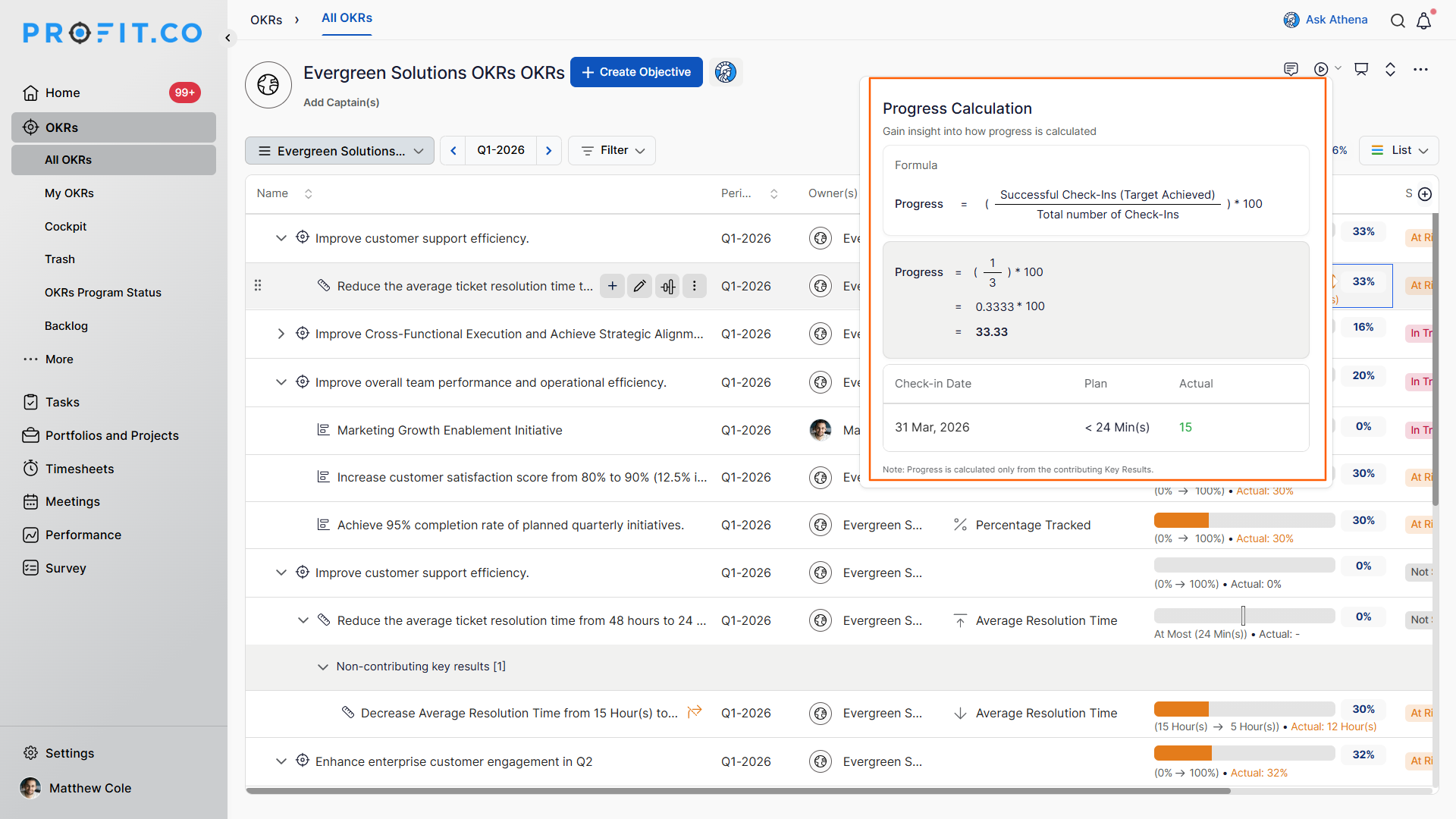
On the List View
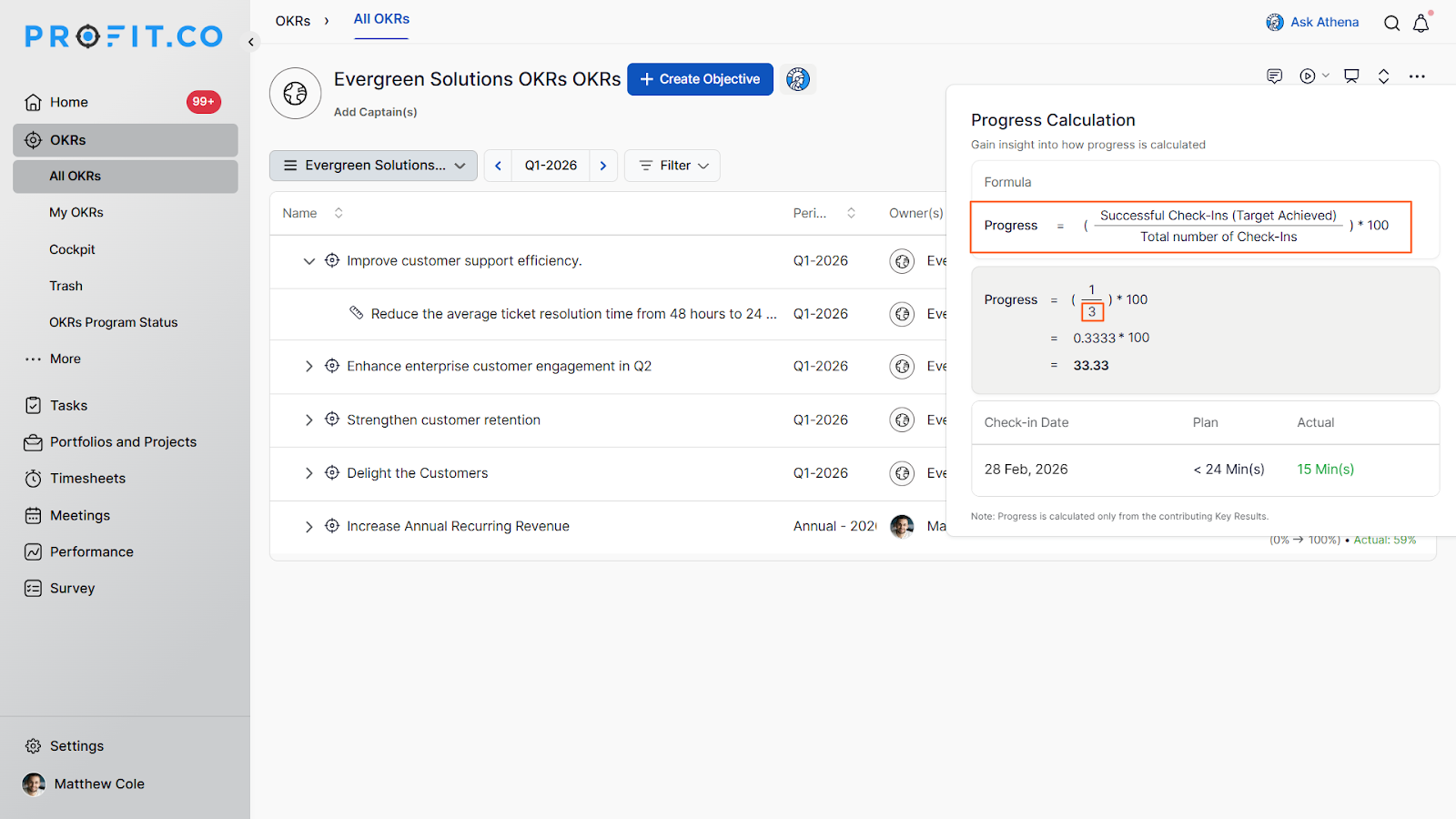
Click on the Progress % of any Key Result directly from the List View to see the formula and calculated values applied for that specific check-in.
On the Bowler Chart
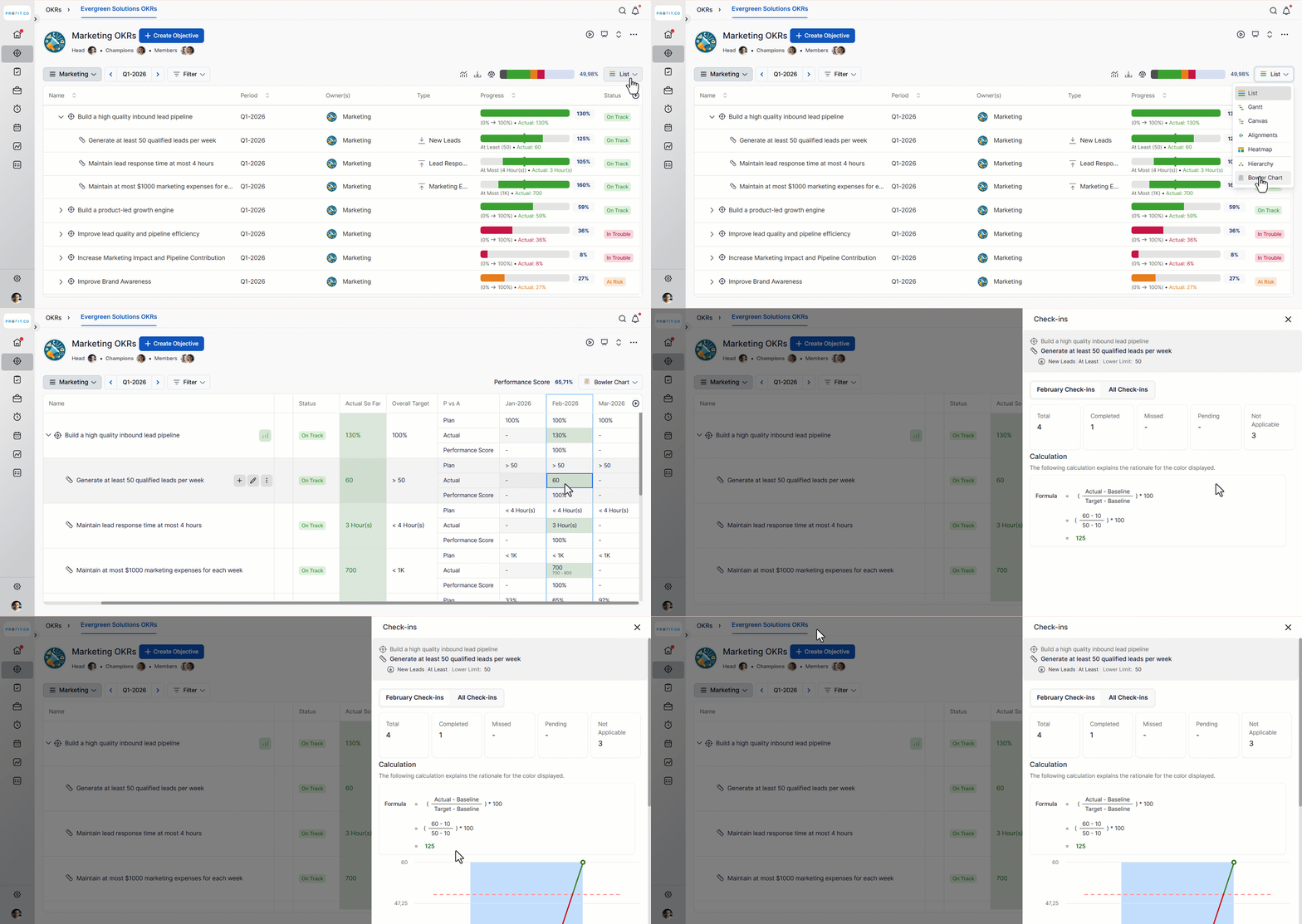
The Bowler Chart view displays the Distance from Target calculation transparently across every check-in period. In the Bowler Chart, you will see:
- The formula is applied for each check-in based on the selected value type
- The calculated progress percentage for every week or check-in period
- A clear breakdown of Actual vs. Target values side by side
- The final progress was highlighted at the last check-in date
Best Practices for Using Successful Check-ins Calculation
- Use this calculation method only for metrics where performance is truly binary — if partial progress matters, use Average or Sum calculation instead.
- Set realistic thresholds for each value type: overly tight ranges on In Between will produce artificially low success rates.
- Align check-in frequency with the natural cadence of the metric — weekly targets work best with weekly check-ins, not ad hoc reporting.
- Do not leave check-in periods blank without a reason. Missed check-ins (no actual value logged) are treated as unsuccessful and reduce overall progress.
- Review the full check-in history at the end of each cycle to distinguish genuinely missed targets from periods where check-ins were simply not submitted.
Related Questions
- Click here to learn more about how to calculate the Average/Sum cumulative value for the Control KPI Key Result
- Click here to learn more about what a Control KPI is
Frequently Asked Questions
Yes. If no actual value is logged for a check-in period, it is treated as an unsuccessful check-in and does not contribute to progress. This is separate from a check-in where a value was submitted but fell outside the threshold.
Yes, the key result type can be edited if you need to restructure how progress is measured. However, changing the calculation method mid-cycle will affect how historical check-ins are interpreted, so it is best to make this decision before check-ins begin.
Yes. A check-in value that is precisely equal to the lower limit or upper limit is treated as successful. Only values strictly below the lower limit or strictly above the upper limit count as unsuccessful.
